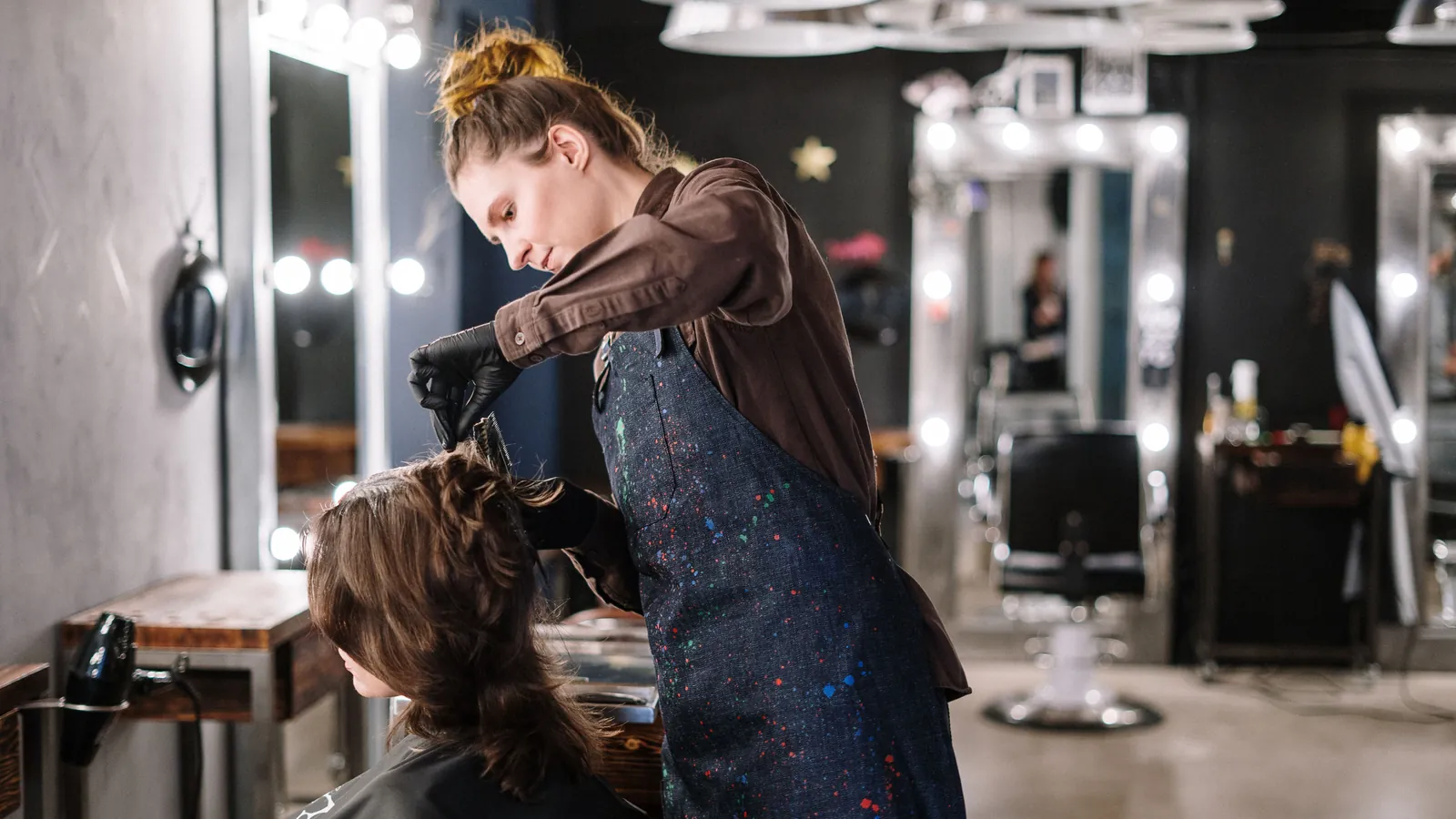
A barber specialises in short cuts, clipper fades, beards and wet shaves. A hairdresser specialises in longer hair, colour, perms and blow-dries. The two trades overlap more than they used to, but for a short or faded men's cut a barber is usually the better and cheaper choice. For colour you need a hairdresser.
What is the difference between a barber and a hairdresser?
The difference is mostly training and what each one does all day. In England the Level 2 Hair Professional apprenticeship splits into a barbering route and a hairdressing route: barbers learn clipper work, fading, shaving and beard design, while hairdressers learn colour, chemical treatments, long-hair cutting and styling.
Neither trade needs a licence in the UK, so anyone can open a barbershop or a salon. A qualification is worth asking about, but you can't assume one.
| Service | Barber | Hairdresser |
|---|---|---|
| Clipper fades and tapers | Core work, done many times a day | Some can, many rarely do |
| Beard shaping and razor shaves | Core work | Rarely offered |
| Colour, highlights, bleach, perms | Rarely, apart from grey blending at some shops | Core work |
| Long hair cut for shape | Varies by barber | Core work |
| Wash and blow-dry | Often a quick dry finish only | Usually included or offered |
| Walk-ins | Common | Less common; most salons book |
Should men go to a barber or a hairdresser?
Most men with short hair are better off at a barber, because fades, tapers, crops and beard work are what barbers practise every day. A hairdresser makes more sense if you want colour, if your hair is long enough that its shape and movement matter, or if you want a styled blow-dry for a wedding or similar event.
Curly and wavy hair can go either way. Some barbers specialise in curls and afro hair and some salons do too, so look at the photos a shop posts before you pick.
Can a barber cut long hair?
Yes, many barbers can, but long hair cut for shape and movement is closer to a hairdresser's everyday work. Barbers often cut longer hair as a longer version of a barber cut, with less layering than a salon would use. If you wear your hair past your ears, pick a barber whose Instagram or booking page shows longer cuts, or ask who in the shop does most of the scissor work. Our men's haircut glossary has the terms to use when you ask.
Can a barber dye your hair?
Most barbers don't offer colour, though some offer grey blending for men. For full colour, highlights or bleach, book a hairdresser: colour needs products, training and insurance that most barbershops don't carry. Hair dye makers also tell you to do a skin allergy test 48 hours before colouring, so expect a salon to ask you in for a patch test first.
Can a barber cut women's hair?
Yes. A barber can cut anyone's hair, and many will do short women's styles such as crops, pixie cuts and undercuts, which rely on the clipper work barbers are good at. Some shops describe themselves as men only, so check the booking page or ring before you go. For long hair or colour, a hairdresser is still the better fit.
Do barbers wash your hair?
Some do and many don't. Lots of barbers cut dry hair or dampen it with a water spray, and not every barbershop has a basin. Hairdressers usually wash before cutting. If you want a wash at a barber's, ask when you book, because some shops charge extra for it.
Unisex salons
A unisex salon can do both jobs well when it has staff trained in both. The risk is a stylist who mostly does colour and long hair being asked to do a skin fade. Ask for the person in the salon who does most of the men's clipper work, and look at the salon's photos: if you see plenty of colour and blow-dries but no fades, book your fade somewhere else.
What each one costs
A standard short back and sides at a barber cost £15 to £24.50 in the towns and £15 to £24 in the big cities whose price lists we read, and £18 to £28 at independent London shops. A skin fade typically cost £19 in towns and £22 in big cities. Salons don't publish men's cut prices in a way we could compare fairly, but they usually charge more, partly because appointments run longer and a salon with basins and colour stations costs more to run.
We took these barber prices from shop price lists checked 28 September 2026. See skin fade prices and how much a haircut should cost for the full figures.
Whichever you choose, the individual matters more than the sign over the door. Our guide to finding a good barber covers what to check, and the Liverpool barbers page lists shops with prices and walk-in details.